Blog Archives
What Is Procurement Maturity and Why It Should Matter for Modern Businesses

What Is Procurement Maturity and Why It Should Matter for Modern Businesses

Procurement is no longer just about purchasing goods and services, rather procurement has become a critical lever for strategic advantage, cost efficiency, risk mitigation, and innovation. However, not all organizations manage procurement with the same level of effectiveness or sophistication; this variation is what we refer to as Procurement Maturity.

What Is Procurement Maturity?

Procurement maturity refers to how advanced, strategic, and integrated the organizational procurement function is across key areas in the business such as – people, processes, technology, governance, and supplier management. How procurement is executed across the business – from basic, reactive purchasing to a fully optimized, value-generating function that supports business growth and innovation. Procurement maturity is typically measured using a structured model or framework that identifies the stages or levels of maturity, usually along a continuum from traditional to world class.

what is procurement maturity

Stages of Procurement Maturity

Although models and frameworks of procurement maturity may differ slightly, most procurement maturity models follow a similar progression through five levels:

World Class

    • Procurement is a strategic, core competency
    • High degree of customer and supplier satisfaction
    • Staffed with highly qualified specialists / other
    • High degree of automation
    • Metrics driven

Best In Class

    • Procurement is seen to create value
    • Good executive support throughout most of the organization
    • ERP system is in use
    • Metrics in place
    • Staff are competent in Procurement practices

Leading

    • Procurement seen as “value add” function
    • Some pursuit of best practices
    • Employees are engaged
    • Some Executive support 

Emerging

    • Procurement seen as “value add” function
    • Some pursuit of best practices
    • Employees are engaged
    • Some Executive support 

Traditional

    • Procurement an afterthought
    • Not a core competency
    • Employees disengaged
    • No interaction between Procurement and supplier base

The Key Elements of Procurement Maturity

Procurement maturity is multi-dimensional concept which includes:

  • People and Skills: Is the procurement team trained, certified, and strategically capable?
  • Processes: Are there clear, efficient, and standardized procedures?
  • Technology and Tools: Is procurement digitized and automated using modern platforms?
  • Governance and Compliance: Are policies enforced and procurement activities transparent?
  • Supplier Relationship Management: Are suppliers seen as partners in value creation?
  • Data and Insights: Is procurement data accurate, accessible, and actionable?

So Why Does Procurement Maturity Matter

Improving procurement maturity brings measurable benefits:

  • Cost Savings: Through strategic sourcing and demand management.
  • Risk Management: Better control over supplier risk, regulatory compliance, and market exposure.
  • Operational Efficiency: Reduced cycle times, fewer errors, and improved service levels.
  • Innovation and Agility: Closer supplier collaboration enables innovation and faster responses to change.
  • Strategic Value: Procurement contributes to sustainability, growth, and competitive advantage.

Organizations with mature procurement functions are better equipped to thrive in a competitive and volatile business environment.

Summary

Procurement maturity is a vital benchmark of how well an organization manages its supplier base, spending, and sourcing strategy. Moving up the maturity curve requires commitment, investment, and a vision that sees procurement not just as a cost centre, but rather as a strategic enabler of value.

Whether your organization is just beginning the procurement journey or aiming to lead in your industry, understanding and improving procurement maturity is a powerful and essential step toward greater business success.

janineh@tkjprocurement.com | etienneh@tkjprocurement.com | www.tkjprocurement.com


Understanding the Differences Between Source-to-Payment and Procure-to-Payment Software

Understanding the Differences Between Source-to-Payment and Procure-to-Payment Software

Managing procurement and payment processes efficiently is crucial for maintaining operational excellence, financial health and control. Two types of software systems that play crucial roles in these processes are Source-to-Payment (S2P) and Procure-to-Payment (P2P) software. While these software systems may seem similar, they serve different functions and address distinct aspects of the procurement and payment lifecycle. Here’s a closer look at the differences between S2P and P2P software:

procurement technology
modern procurement

1      Scope and Focus

Source-to-Payment Software:

Scope: S2P software covers the entire procurement lifecycle, starting from the initial need identification and sourcing phase to the final payment for goods or services. It integrates various processes, including supplier relationship management, contract management, procurement, and payment.

Focus: The primary focus of S2P is to optimize the end-to-end procurement process. This includes identifying and evaluating suppliers, negotiating contracts, managing supplier relationships, and ensuring compliance with procurement policies.

Procure-to-Payment Software:

Scope: P2P software specifically focuses on the procurement and payment phases. It streamlines the processes involved in requisitioning goods or services, processing purchase orders, receiving goods or services, and handling invoice approvals and payments.

Focus: P2P is primarily concerned with the efficiency of purchasing and payment processes. Its goal is to ensure that the purchasing cycle is smooth, that invoices are processed accurately and promptly, and that payments are made on time.


2      Key Components and Functionalities

Source-to-Payment Software:

Sourcing: Tools for finding and evaluating suppliers, conducting auctions, and managing tenders and RFx processes.

Contract Management: Features for creating, negotiating, and managing contracts, including compliance tracking and renewal reminders.

Procurement: Integrated procurement functionalities that align with sourcing and contract terms.

Payment: While S2P includes payment processing, it is not its primary focus. Payment processing in S2P systems is often more about ensuring compliance with contract terms and less about the transactional details.

Procure-to-Payment Software:

Requisitioning: Tools for creating and managing purchase requisitions.

Purchase Orders: Features for generating and managing purchase orders, including approvals and tracking.

Receiving: Functionality for recording the receipt of goods or services and matching them with purchase orders.

Invoice Processing: Tools for receiving, validating, and approving invoices, ensuring accuracy before payment.

Payment: Systems for processing and tracking payments, managing payment terms, and handling vendor queries related to payments.


3      Integration and Interdependencies

Source-to-Payment Software:

Integration: S2P systems often integrate with various other enterprise systems, such as Enterprise Resource Planning (ERP) systems, to provide a comprehensive view of procurement and financial data. This integration ensures that sourcing decisions align with financial planning and reporting.

Interdependencies: Because S2P spans a broader range of activities, it relies on seamless integration with supplier management, contract management, and procurement modules to function effectively.

Procure-to-Payment Software:

Integration: P2P systems typically integrate with ERP systems for financial management and accounting purposes. Integration with inventory management and logistics systems may also be necessary to track goods and services throughout the procurement cycle.

Interdependencies: P2P processes are closely linked to accounts payable and financial reporting. Effective P2P systems ensure that procurement activities are aligned with financial controls and reporting requirements.


4      Implementation and Use Cases

Source-to-Payment Software:

Implementation: Implementing an S2P system often involves a more extensive setup due to its broader scope. Organizations may need to invest in training and change management to fully leverage the capabilities of S2P systems.

Use Cases: Ideal for organizations that require a comprehensive solution for managing the entire procurement lifecycle, including strategic sourcing and contract management, in addition to procurement and payment.

Procure-to-Payment Software:

Implementation: P2P systems can often be implemented more quickly than S2P systems due to their more focused scope. They are usually easier to deploy and integrate with existing accounting and financial systems.

Use Cases: Best suited for organizations looking to streamline and automate their procurement and payment processes, with a focus on efficiency, accuracy, and compliance in purchasing and payments.


5      Conclusion

While both Source-to-Payment and Procure-to-Payment software aim to enhance procurement and payment processes, they cater to different needs within the procurement lifecycle. S2P software offers a comprehensive solution that spans from sourcing to payment, addressing a broad range of procurement activities. In contrast, P2P software focuses specifically on optimizing the procurement and payment phases, ensuring efficiency and accuracy in these critical processes. Understanding these differences can help organizations choose the right software solution based on their specific needs and objectives, ultimately leading to improved procurement efficiency and financial management.

janineh@tkjprocurement.com | etienneh@tkjprocurement.com | www.tkjprocurement.com


The Modern Procurement Department
modern procurement

The Modern Procurement Department

In the everchanging landscape of modern business, the procurement department has become a cornerstone in the architecture of organizational success. Evolving from its traditional role of simply acquiring goods and services, the modern procurement department has transformed into a strategic powerhouse, driving efficiency, innovation, and sustainability across the entire supply chain.

Gone are the days when procurement was confined to negotiating prices and issuing purchase orders. Today, it is a multifaceted function that encompasses strategic planning, supplier relationship management, risk mitigation, and technological integration. The procurement department is no longer relegated to the back office; instead, it is increasingly positioned at the forefront of decision-making processes, collaborating closely with other key stakeholders to achieve overarching business objectives.

One of the defining characteristics of the modern procurement department is its strategic orientation. Rather than focusing solely on cost savings, today’s procurement professionals are tasked with delivering value to the organization in various forms. This may include identifying opportunities for process optimization, fostering innovation through supplier partnerships, or ensuring compliance with regulatory standards and ethical practices. By aligning procurement strategies with broader business goals, organizations can unlock new sources of competitive advantage and drive sustainable growth.

Furthermore, the modern procurement department recognizes the importance of supplier relationships in achieving long-term success. Rather than adopting a transactional approach, procurement professionals now seek to cultivate strategic partnerships with suppliers based on mutual trust, transparency, and collaboration. By engaging suppliers as strategic allies rather than adversaries, organizations can leverage their expertise, drive innovation, and mitigate supply chain risks effectively.

Technology plays a pivotal role in the modernization of procurement practices. Automation, artificial intelligence, and data analytics are revolutionizing how procurement processes are conducted, enabling greater efficiency, accuracy, and agility. Advanced procurement software platforms offer features such as spend analysis, supplier performance monitoring, and contract management, empowering procurement professionals to make data-driven decisions and optimize resource allocation effectively.

Moreover, digitalization enables greater visibility and transparency across the supply chain, allowing organizations to identify potential bottlenecks, track inventory levels in real-time, and anticipate market fluctuations more accurately. Emerging technologies such as blockchain hold the promise of revolutionizing supply chain management by enhancing traceability, security, and integrity throughout the procurement process.

In addition to driving operational excellence, the modern procurement department also plays a critical role in advancing sustainability goals. As businesses face increasing pressure to minimize their environmental footprint and promote social responsibility, procurement professionals are tasked with integrating sustainability criteria into supplier selection and sourcing decisions. By partnering with eco-conscious suppliers, implementing green procurement practices, and adopting circular economy principles, organizations can reduce waste, mitigate environmental risks, and enhance their reputation as responsible corporate citizens.

In conclusion, the modern procurement department represents a paradigm shift in how organizations approach sourcing, purchasing, and supply chain management. By embracing strategic thinking, fostering collaborative supplier relationships, harnessing the power of technology, and championing sustainability initiatives, procurement professionals are driving transformative change and positioning their organizations for long-term success in an increasingly competitive global marketplace. As businesses continue to evolve and adapt to new challenges, the modern procurement department will remain a linchpin in driving innovation, resilience, and value creation across the entire enterprise.

janineh@tkjprocurement.com | etienneh@tkjprocurement.com | www.tkjprocurement.com


Procurement Technology
procurement technology

Procurement Technology

At TKJ Procurement the procurement transformation process starts with our Capability and Maturity Model (CAMM) assessment.

The CAMM assesses the enabling technologies employed in the procurement environment; the sub-capabilities considered includes the assessment of technology in the Source to Contract cycle as well as the Purchasing to Payment value chains.

Our assessment considers how technology solutions are used and the level of automation.

Procurement Technology Solutions in and of itself does not result in procurement maturity, in our experience to achieve procurement maturity technology solutions should be enabling the procurement strategy. The value of procurement technology should not just be to do more with less, rather the full value of procurement technology solutions are when the procurement department is able to do things that it could not or did not do before. This includes achieving objectives such as:

  • Generating Management information to ensure effective oversight and improvement across the value chain.
  • Driving procurement efficiencies
  • Driving a strategic and collaborative business partner
  • Creating value for your client.
  • Designing, developing, and implementing holistic and sustainable solutions which match the organizational objectives

Before embarking on a roll-out of procurement technology solutions we suggest managers answer these questions:

  • How does the procurement technology achieve the objectives of the company’s business strategy?
  • Is a company Data Strategy or Data Governance approach available to support the effective usage of the procurement technology?
  • Is a plan available to acquire or grow the skills that the company will require to support the procurement technology strategy?
  • Is a plan available for training, retraining or re-skilling of employees whose positions become redundant due to automation?
  • Does the technology strategy spell out the infrastructure requirements to support the strategy?
  • Is a plan available to manage and deal with unintended consequences of procurement technology solutions implementation?

Over the next few months, I will unpack how procurement technology solutions can contribute to procurement maturity and what organizations can and must do to make this possible.

janineh@tkjprocurement.com | etienneh@tkjprocurement.com | www.tkjprocurement.com


Beneficiary Management System Part 3

Beneficiary Management System
Part 3

Measuring Impact with the Beneficiary Management System

Baseline Data

The initial information forms the baseline data and the basis for measurements. It is important to accurately capture the initial status of the beneficiary businesses. Typically, collected data are:  number of employees and clients, value of contracts, turn-over/revenue, profitability, value of assets, market penetration, productivity, management effectiveness, etc. The baseline data may also include financial statements and various company registration, shareholding, tax documents etc. By comparing the base data with data captured after various stages of intervention, progress can be determined. Eventually a picture of growth in market share, employee numbers, productivity, service and product offering, profitability etc. unfolds.

TKJ Procurement

How to Report with BMS

TKJ Procurement

By defining the reporting requirements in the planning stage i.e. what do you want to report on and what data to be captured and compared  to achieve certain reporting requirements,  the BMS is able to provide detailed or high-level reports as and when required. The reporting capabilities are further enhanced as information can also be downloaded to generate ad-hoc reports.

TKJ Procurement

Because of this approach the BMS is customizable to meet individual client requirements, can be implemented across various business sectors and development programs. As such, the BMS becomes a multifaceted tool able to optimize impact assessment guided by automated reporting. 

janineh@tkjprocurement.com | etienneh@tkjprocurement.com | www.tkjprocurement.com


Supplier Relationship Management and Third-Party Risk Management Model
In this issue
12 March 2020:

Supplier Relationship Management and Third-Party Risk Management Model

Introduction

In our interactions with clients we find that organisations have a very one-dimensional approach to Supplier Relationship Management (SRM). We find the value of SRM is focused only on cost reduction and SLA management.

This blog is focused on the implementation approach that was followed in Project Ignite to introduce and embed the principles of SRM.

“Procurement without supplier management is like sales without account management. It does not work.”
(Lars Kuch Pedersen, LeanLinking)

Current State of SRM

  • One dimensional approach addressing one function, such as performance with small sets of suppliers.
  • Heavily focused on transactional stage of vendor life cycle
  • Value of SRM is only tied to cost reduction and SLA management
  • Viewed and executed as set of tactical activities
  • SRM and Vendor Management activities are dispersed through the organization with limited control.

Future State of SRM

  • Suppliers Relationship Management intrinsic to the success of the organization through the use of strategy and advanced vendor management framework.
  • Holistic view of suppliers across the various business functions
  • Advanced skills in data analytics, financial review and risk management
  • ROI measurement in terms of strategic business outcomes.
  • Define strategic vendor management intent, goal and relationship outcome
  • Governance expanded and extended across internal teams and strategic vendors.

Migration

  • Assess current maturity against desired state
  • Implement Strategic Vendor Management Framework
  • Clarify, standardize and streamline Vendor Management Process

Value can be derived through strategic and performance-based collaboration

strategic sourcing

Without rigorous contract management 75% of sourcing savings can disappear withing 18 months.

SRM Process – Detailed Approach

supplier phases

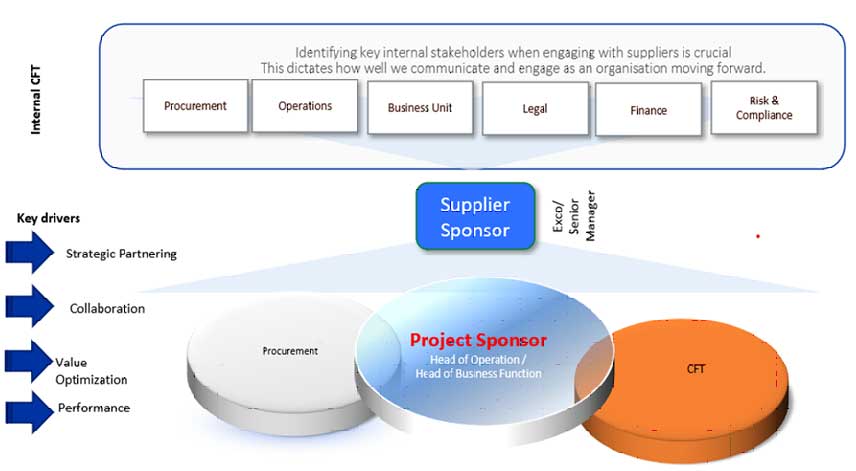
Cross Functional Team Driving SRM

internal CFT

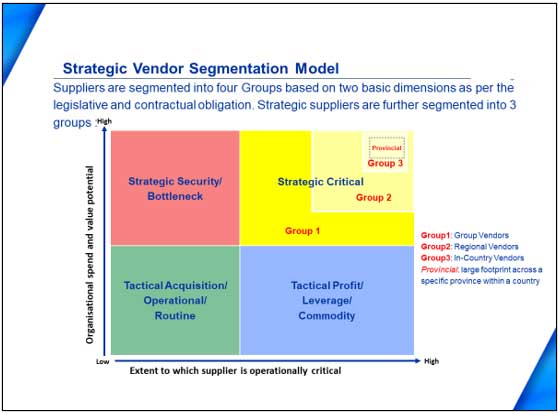
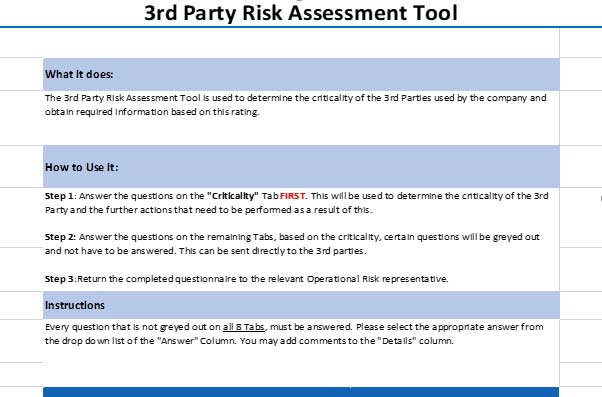
SRM and Risk Segmentation Model

strategic vendor segmentation model
3rd party risk assessment tool

Initiate Supplier Relationship Management Plan

supplier chart

Supplier Management Reviews

agenda for interactions with suppliers

Supplier Management Review Results

performance review dashboard

Summary

To secure the suppliers commitment to the relationship and continuous high service delivery, reward programs such as Supplier Compliance Certificate or Supplier Recognition can be implemented within the SRM Plan.

There are Several benefits associated with supplier relationship management, and they all culminate in a healthier bottom line as we saw in Project Ignite.

  • Reduced costs
  • Increased efficiency
  • Consolidation of the supply chain
  • Management of supplier performance
  • Continual improvement of operations
  • Improved risk and compliance profile

janineh@tkjprocurement.com | etienneh@tkjprocurement.com | www.tkjprocurement.com


Project Ignite – Strategic Sourcing Case Study
In this issue 18 February 2020:

Project Ignite – Strategic Sourcing Case Study

Introduction

In my last blog Procurement Capability and Maturity Model dated 30 January 2020, one of the improvements focussed on was the introduction of strategic sourcing. The practical approach adopted is discussed below.

Project Objectives

  1. Identify sourcing opportunities and build category plans.
  2. Identify sourcing opportunities and sourcing approaches to effectively deliver sourcing benefits.
  3. Establish the sourcing governance for effective procurement decision making.
  4. Obtain approval from the relevant governance committees to move into the sourcing phase of this project.

Determine Market Competition

Barriers to entry include high capital outlays and high operating costs, the market remains very competitive in the battle for market share

project ignite

External Market Forces

The company should focus on identifying suppliers with good local content credentials. Appointed vendors must however be compliant with legislation and should be able to meet environmental requirements.

project ignite

Conclusion

  • Although there is a trend away from cash, most countries on the continent are still very cash dependent. Suppliers are shifting their focus from risks to managing costs in a better way. Technology plays a key role in reducing costs and will be critical from reducing the dependence on humans as well through the advent of ATM’s, note sorters and Cash in Transit companies
  • Barriers to entry include high capital outlays and high operating costs, the market remains very competitive in the battle for market share
  • The countries should focus on identifying suppliers with good local content credentials. Appointed vendors must however be compliant with legislation and should be able to meet environmental requirements

Category and Supplier Positioning

Suppliers are not aligned to how the company views the commodity. The company must align the profile of this commodity with suppliers and treat them as strategic if they wish to negotiate better deals, service improvements and get sustained value from vendors.

supply market challenge risk

Sourcing Maturity

The commodity is relatively immature in the selected countries. By adopting procurement best practices and focusing on closing the gaps ROA will benefit financially and operationally from improved vendor relationships.

cash commodity maturity

Sourcing Opportunities – levers

Workshops held with the team identified and prioritised spend consolidation, best cost evaluation, specification improvement and total cost management the primary sourcing levers to focus on in the initial phases.

opportunity grid


What this means in practise is that procurement focussed on negotiating and implementing the following…….

procurement models

Suggested Sourcing Approach

  • Option A: Sourcing is done centrally by ROA team
  • Option B: Sourcing is facilitated by ROA team in conjunction with the in-Country teams
  • Option C: Sourcing is done by the in-country teams

Pros and cons for the 3 possible options

sourcing projects

High level sourcing strategy

opportunity analysis

Summary

Based on the introduction of category management and other strategic sourcing principles the savings improved as follows:

Year 1: R7m
Year 2: R61m
Introduction of strategic sourcing with emphasis on category management happened after year 2. This included improved demand planning, market analysis and benchmarking, improvement in the sourcing approach based on a 3-pronged approach (group, regional, in-country), contracting and the introduction of supplier performance and relationship management.

Year 3: R 169.3m
Year 4: R 205. 0m

janineh@tkjprocurement.com | etienneh@tkjprocurement.com | www.tkjprocurement.com


Procurement Capability and Maturity Model
In this issue 30 January 2020:

Procurement Procurement Capability and Maturity Model

Introduction

At TKJ we start the procurement transformation process with a Procurement Capability and Maturity Assessment (CAMM). Our CAMM has been devised to enable development across the end-to-end procurement value chain, addressing people, process, systems and structure in line with industry best practices. Our assessments highlight strengths as well as development needs, and the resulting action plans are integrated into everyday operations for continuous improvement.

“Being a strategic business partner means so much more than negotiating a discount” — (Remko van Hoek, 2013).

Capability and Maturity Model

Project Ignite

Case Study – Project Ignite

Approach

  • Used CAMM for rapid establishment of procurement excellence across 16 African countries at a blue-chip bank utilising a brand-new style of work with a fast-moving, outputs-driven, all-hands-on-deck, consultancy-style approach

  • Utilised organisation-wide consultation, thought leadership training, talent management and practical implementation approaches

  • Leveraged business objectives and best practices

CAMM Best Practices

  • Strategic Sourcing:
    Define, formalise and embed Sourcing best practices in Rest of Africa Procurement to enable reduction in TCO of goods and services based on the consideration of Centre-Led, Regional and In-Country Procurement

  • Supplier Relationship Management:
    Define, formalise and embed a Supplier Relationship Management Framework in RoA Procurement to drive reduction in TCO of goods and services

  • Business Intelligence:
    Define, formalise and embed the Procurement Management Information Framework for RoA across the Source to Pay Lifecycle to provide visibility of compliance

  • Procurement Governance and Risk Management:
    Define, formalise and embed the Governance, Risk, Control, Compliance and Audit framework in RoA

  • Procurement Operational Processes, People and Capability and Enabling Technology:
    Define, formalise and embed the RoA Capability Plan to drive improved service delivery and execution across the Source to Pay Lifecycle. The consideration extended to: Processes, Systems and People and will be continually leveraged to help professionalise the procurement industry in Africa

  • Organizational Interfaces:
    Define, formalise and embed the Stakeholder Engagement Framework in order to bolster relationships and the strategic extraction of value

Summary of Achievements

  • Savings improved by 177% due to the implementation of Category Management

  • Implementation of SRM and Contract Management Framework to improve 3rd Party Risk Management

  • Integrated Risk and Governance Framework implemented which led to 83% improvement in audit results

  • Implementation of Capability Improvement plan that improved the people, process and technology capability.

  • MI Reporting

  • Risk and Compliance Reporting

  • Contract Management Reporting

  • Customer Satisfaction Surveys

  • SRM

  • Benefits Reporting

  • Performance Management Scorecard

janineh@tkjprocurement.com | etienneh@tkjprocurement.com | www.tkjprocurement.com


Transforming the Procurement Department
In this issue
10 January 2020:

Transforming the Procurement Department

Introduction

TKJ Procurement Consulting and Training (Pty) Ltd was formed in September 2017 with the purpose to elevate procurement departments to become an integral partner in driving business strategy, make impactful contribution to the bottom line and drive effective risk management of the organisation.

Based on our procurement capability and maturity assessments conducted over the past two years, we observe that procurement continues to be seen as a buying function and as a result most companies do not harness the strategic value of their procurement departments. Another observation is that procurement often is seen as a stumbling block to achieving business strategy instead of an enabler to achieving the business strategy.

Transforming the Procurement Department

  • Position the procurement department as a  strategic and collaborative business partner through sustainable value creation.

  • Create value for your client through transformation projects that enable improvement in the maturity and capability of the supply and procurement value chain.

  • Build agile business processes and systems to drive procurement efficiencies

  • Design, develop and implement holistic solutions which are sustainable and match the organizational objectives

  • Use management information to ensure effective oversight and improvement across the value chain;

  • Develop skilled resources to deliver the Procurement strategy.

Procurement transformation refers to a specific type of organizational change management which focuses on strategies to enable major and long-term improvements to procurement and supply management processes, activities and relationships”

(Day and Atkinson, 2004).

A transformed procurement department provide the organization with a competitive advantage in that the entire Source to Pay process is efficient and highly collaborative. The TKJ Procurement Capability and Maturity Model (CAMM) has been devised to enable development across the end-to-end procurement value chain, addressing people, process, systems and structure in line with industry best practices. Our assessment highlights strengths as well as development needs, and the resulting action plans for implementation into everyday operations for continuous improvement. Over the next few months I will unpack each step in the transformation process.

janineh@tkjprocurement.com | etienneh@tkjprocurement.com | www.tkjprocurement.com