Category: Blogs
Supplier Relationship Management and Third-Party Risk Management Model
In this issue
12 March 2020:

Supplier Relationship Management and Third-Party Risk Management Model

Introduction

In our interactions with clients we find that organisations have a very one-dimensional approach to Supplier Relationship Management (SRM). We find the value of SRM is focused only on cost reduction and SLA management.

This blog is focused on the implementation approach that was followed in Project Ignite to introduce and embed the principles of SRM.

“Procurement without supplier management is like sales without account management. It does not work.”
(Lars Kuch Pedersen, LeanLinking)

Current State of SRM

  • One dimensional approach addressing one function, such as performance with small sets of suppliers.
  • Heavily focused on transactional stage of vendor life cycle
  • Value of SRM is only tied to cost reduction and SLA management
  • Viewed and executed as set of tactical activities
  • SRM and Vendor Management activities are dispersed through the organization with limited control.

Future State of SRM

  • Suppliers Relationship Management intrinsic to the success of the organization through the use of strategy and advanced vendor management framework.
  • Holistic view of suppliers across the various business functions
  • Advanced skills in data analytics, financial review and risk management
  • ROI measurement in terms of strategic business outcomes.
  • Define strategic vendor management intent, goal and relationship outcome
  • Governance expanded and extended across internal teams and strategic vendors.

Migration

  • Assess current maturity against desired state
  • Implement Strategic Vendor Management Framework
  • Clarify, standardize and streamline Vendor Management Process

Value can be derived through strategic and performance-based collaboration

strategic sourcing

Without rigorous contract management 75% of sourcing savings can disappear withing 18 months.

SRM Process – Detailed Approach

supplier phases

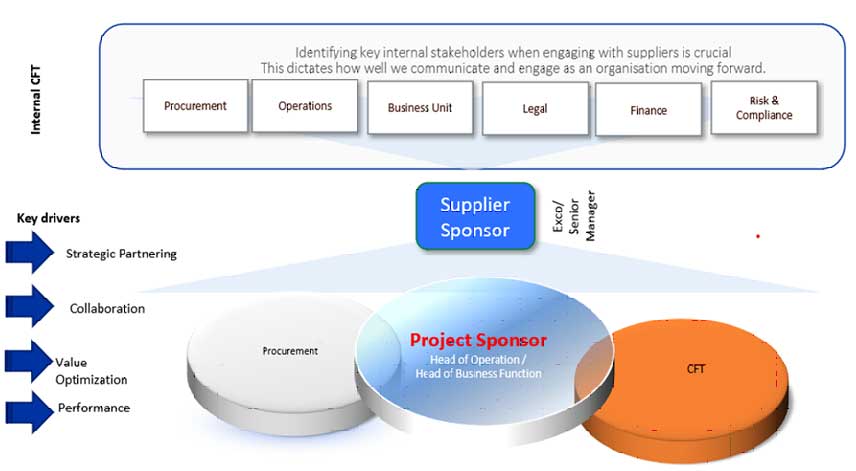
Cross Functional Team Driving SRM

internal CFT

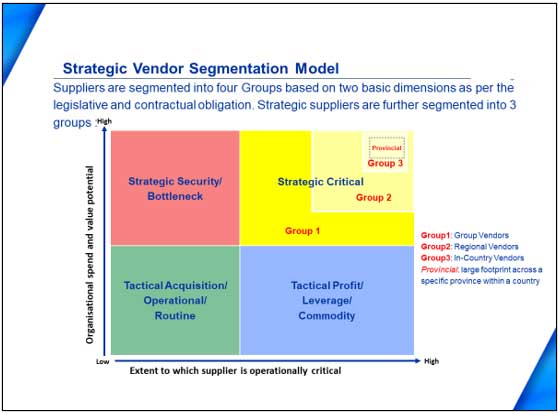
SRM and Risk Segmentation Model

strategic vendor segmentation model
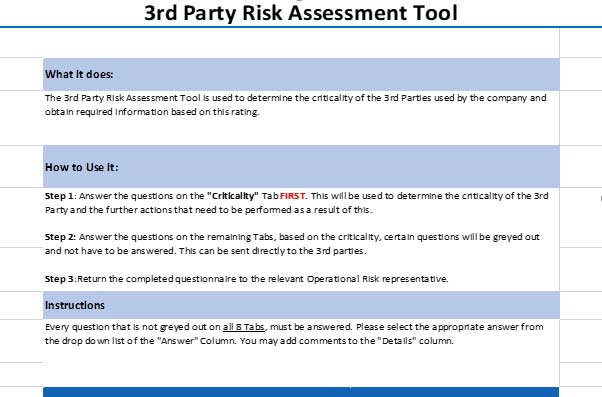
3rd party risk assessment tool

Initiate Supplier Relationship Management Plan

supplier chart

Supplier Management Reviews

agenda for interactions with suppliers

Supplier Management Review Results

performance review dashboard

Summary

To secure the suppliers commitment to the relationship and continuous high service delivery, reward programs such as Supplier Compliance Certificate or Supplier Recognition can be implemented within the SRM Plan.

There are Several benefits associated with supplier relationship management, and they all culminate in a healthier bottom line as we saw in Project Ignite.

  • Reduced costs
  • Increased efficiency
  • Consolidation of the supply chain
  • Management of supplier performance
  • Continual improvement of operations
  • Improved risk and compliance profile

janineh@tkjprocurement.com | etienneh@tkjprocurement.com | www.tkjprocurement.com


Project Ignite – Strategic Sourcing Case Study
In this issue 18 February 2020:

Project Ignite – Strategic Sourcing Case Study

Introduction

In my last blog Procurement Capability and Maturity Model dated 30 January 2020, one of the improvements focussed on was the introduction of strategic sourcing. The practical approach adopted is discussed below.

Project Objectives

  1. Identify sourcing opportunities and build category plans.
  2. Identify sourcing opportunities and sourcing approaches to effectively deliver sourcing benefits.
  3. Establish the sourcing governance for effective procurement decision making.
  4. Obtain approval from the relevant governance committees to move into the sourcing phase of this project.

Determine Market Competition

Barriers to entry include high capital outlays and high operating costs, the market remains very competitive in the battle for market share

project ignite

External Market Forces

The company should focus on identifying suppliers with good local content credentials. Appointed vendors must however be compliant with legislation and should be able to meet environmental requirements.

project ignite

Conclusion

  • Although there is a trend away from cash, most countries on the continent are still very cash dependent. Suppliers are shifting their focus from risks to managing costs in a better way. Technology plays a key role in reducing costs and will be critical from reducing the dependence on humans as well through the advent of ATM’s, note sorters and Cash in Transit companies
  • Barriers to entry include high capital outlays and high operating costs, the market remains very competitive in the battle for market share
  • The countries should focus on identifying suppliers with good local content credentials. Appointed vendors must however be compliant with legislation and should be able to meet environmental requirements

Category and Supplier Positioning

Suppliers are not aligned to how the company views the commodity. The company must align the profile of this commodity with suppliers and treat them as strategic if they wish to negotiate better deals, service improvements and get sustained value from vendors.

supply market challenge risk

Sourcing Maturity

The commodity is relatively immature in the selected countries. By adopting procurement best practices and focusing on closing the gaps ROA will benefit financially and operationally from improved vendor relationships.

cash commodity maturity

Sourcing Opportunities – levers

Workshops held with the team identified and prioritised spend consolidation, best cost evaluation, specification improvement and total cost management the primary sourcing levers to focus on in the initial phases.

opportunity grid


What this means in practise is that procurement focussed on negotiating and implementing the following…….

procurement models

Suggested Sourcing Approach

  • Option A: Sourcing is done centrally by ROA team
  • Option B: Sourcing is facilitated by ROA team in conjunction with the in-Country teams
  • Option C: Sourcing is done by the in-country teams

Pros and cons for the 3 possible options

sourcing projects

High level sourcing strategy

opportunity analysis

Summary

Based on the introduction of category management and other strategic sourcing principles the savings improved as follows:

Year 1: R7m
Year 2: R61m
Introduction of strategic sourcing with emphasis on category management happened after year 2. This included improved demand planning, market analysis and benchmarking, improvement in the sourcing approach based on a 3-pronged approach (group, regional, in-country), contracting and the introduction of supplier performance and relationship management.

Year 3: R 169.3m
Year 4: R 205. 0m

janineh@tkjprocurement.com | etienneh@tkjprocurement.com | www.tkjprocurement.com


Procurement Capability and Maturity Model
In this issue 30 January 2020:

Procurement Procurement Capability and Maturity Model

Introduction

At TKJ we start the procurement transformation process with a Procurement Capability and Maturity Assessment (CAMM). Our CAMM has been devised to enable development across the end-to-end procurement value chain, addressing people, process, systems and structure in line with industry best practices. Our assessments highlight strengths as well as development needs, and the resulting action plans are integrated into everyday operations for continuous improvement.

“Being a strategic business partner means so much more than negotiating a discount” — (Remko van Hoek, 2013).

Capability and Maturity Model

Project Ignite

Case Study – Project Ignite

Approach

  • Used CAMM for rapid establishment of procurement excellence across 16 African countries at a blue-chip bank utilising a brand-new style of work with a fast-moving, outputs-driven, all-hands-on-deck, consultancy-style approach

  • Utilised organisation-wide consultation, thought leadership training, talent management and practical implementation approaches

  • Leveraged business objectives and best practices

CAMM Best Practices

  • Strategic Sourcing:
    Define, formalise and embed Sourcing best practices in Rest of Africa Procurement to enable reduction in TCO of goods and services based on the consideration of Centre-Led, Regional and In-Country Procurement

  • Supplier Relationship Management:
    Define, formalise and embed a Supplier Relationship Management Framework in RoA Procurement to drive reduction in TCO of goods and services

  • Business Intelligence:
    Define, formalise and embed the Procurement Management Information Framework for RoA across the Source to Pay Lifecycle to provide visibility of compliance

  • Procurement Governance and Risk Management:
    Define, formalise and embed the Governance, Risk, Control, Compliance and Audit framework in RoA

  • Procurement Operational Processes, People and Capability and Enabling Technology:
    Define, formalise and embed the RoA Capability Plan to drive improved service delivery and execution across the Source to Pay Lifecycle. The consideration extended to: Processes, Systems and People and will be continually leveraged to help professionalise the procurement industry in Africa

  • Organizational Interfaces:
    Define, formalise and embed the Stakeholder Engagement Framework in order to bolster relationships and the strategic extraction of value

Summary of Achievements

  • Savings improved by 177% due to the implementation of Category Management

  • Implementation of SRM and Contract Management Framework to improve 3rd Party Risk Management

  • Integrated Risk and Governance Framework implemented which led to 83% improvement in audit results

  • Implementation of Capability Improvement plan that improved the people, process and technology capability.

  • MI Reporting

  • Risk and Compliance Reporting

  • Contract Management Reporting

  • Customer Satisfaction Surveys

  • SRM

  • Benefits Reporting

  • Performance Management Scorecard

janineh@tkjprocurement.com | etienneh@tkjprocurement.com | www.tkjprocurement.com


Transforming the Procurement Department
In this issue
10 January 2020:

Transforming the Procurement Department

Introduction

TKJ Procurement Consulting and Training (Pty) Ltd was formed in September 2017 with the purpose to elevate procurement departments to become an integral partner in driving business strategy, make impactful contribution to the bottom line and drive effective risk management of the organisation.

Based on our procurement capability and maturity assessments conducted over the past two years, we observe that procurement continues to be seen as a buying function and as a result most companies do not harness the strategic value of their procurement departments. Another observation is that procurement often is seen as a stumbling block to achieving business strategy instead of an enabler to achieving the business strategy.

Transforming the Procurement Department

  • Position the procurement department as a  strategic and collaborative business partner through sustainable value creation.

  • Create value for your client through transformation projects that enable improvement in the maturity and capability of the supply and procurement value chain.

  • Build agile business processes and systems to drive procurement efficiencies

  • Design, develop and implement holistic solutions which are sustainable and match the organizational objectives

  • Use management information to ensure effective oversight and improvement across the value chain;

  • Develop skilled resources to deliver the Procurement strategy.

Procurement transformation refers to a specific type of organizational change management which focuses on strategies to enable major and long-term improvements to procurement and supply management processes, activities and relationships”

(Day and Atkinson, 2004).

A transformed procurement department provide the organization with a competitive advantage in that the entire Source to Pay process is efficient and highly collaborative. The TKJ Procurement Capability and Maturity Model (CAMM) has been devised to enable development across the end-to-end procurement value chain, addressing people, process, systems and structure in line with industry best practices. Our assessment highlights strengths as well as development needs, and the resulting action plans for implementation into everyday operations for continuous improvement. Over the next few months I will unpack each step in the transformation process.

janineh@tkjprocurement.com | etienneh@tkjprocurement.com | www.tkjprocurement.com